Our competences
Patents and utility models
are prohibitive rights granted for a limited period of time by the legislature for the novel result of an inventive step in the technical field.
Trademarks ...
are prohibitive rights granted by the legislature for a distinctive sign having exclusive rights of use for certain goods and/or services for a limited period of time which can be extended as desired.
Registered designs
are prohibitive rights granted for a limited period of time by the legislature for a new and unique two- or three-dimensional design of objects in certain groups of goods.
We are professional representatives before
- dem German Patent and Trade Mark Office (DPMA)
- dem European Patent Office (EPA)
- dem European Union Intellectual Property Office (EUIPO)
The firm
History
The firm was founded in 1992 in Hamm, Westphalia, by patent attorney Christoph Kayser on a greenfield basis. It became known in the region not least through ten years of teaching at Paderborn University, Soest campus.
Following continuous growth and a number of spectacular trademark proceedings, the firm joined forces across locations with patent attorney Steffen Möbus in Munich. The close connection with Mr Möbus continues to this day, albeit purely on a cooperative basis.
Because of his Berlin roots, patent attorney Kayser relocated the firm to Berlin in 2002. Since patent attorney Dr Werner Cobet joined, the Hamm office has been headed by him. The firm has been called Kayser & Cobet ever since.
Since 2004, offices in Lemgo and Lippstadt have been added to those in Berlin and Hamm. With four locations in total, the catchment areas now extend across Westphalia, Eastern Westphalia, Lippe, Schaumburg and Brandenburg, so that journeys have become considerably shorter for clients from Dortmund, Unna, Soest, Arnsberg, Warstein, Bestwig, Paderborn, Rietberg, Gütersloh, Verl, Bielefeld, Herford, Detmold, Horn-Bad Meinberg, Lage, Bad Salzuflen, Minden, Rinteln, Kalletal, Extertal, Blomberg, Hameln, Neuruppin and Oranienburg.
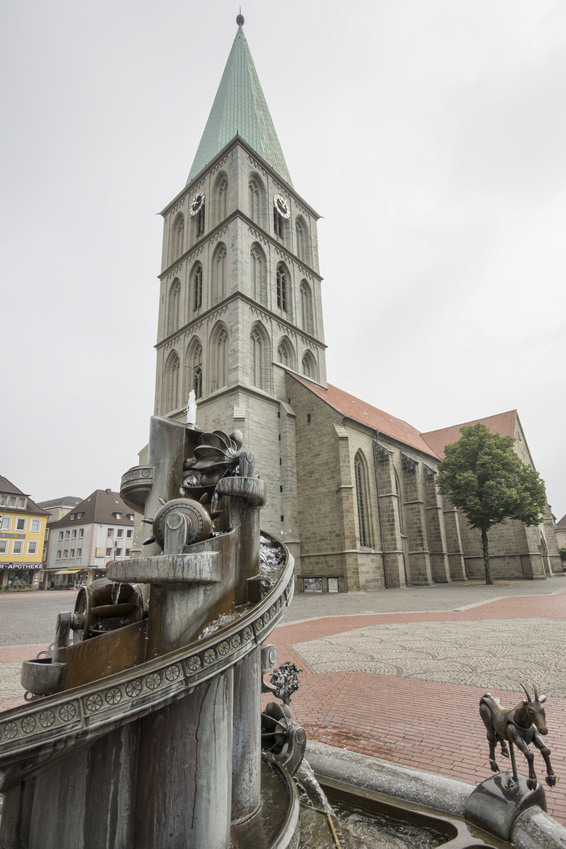
Pauluskirche in Hamm
The founders
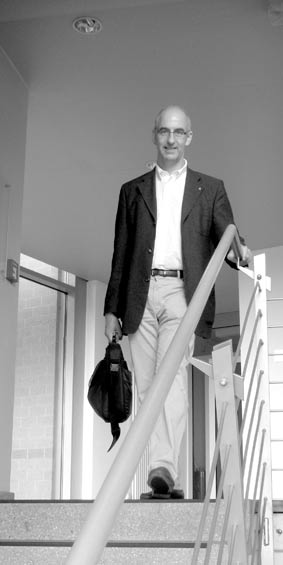
Christoph Kayser
Christoph Kayser worked during his studies in geology and geophysics at TU Clausthal and RWTH Aachen on geophysical and geochemical projects for the prospecting and exploration of organic deposits. After graduating he moved to the Institute of Petroleum Research at TU Clausthal, where he took part in a research project developing a model for CO2 flooding of oil reservoirs with the aim of improving their yield.
After studying industrial property law and training as a patent attorney at a larger patent law firm as well as at the German Patent and Trade Mark Office and the Federal Patent Court in Munich, Christoph Kayser founded the patent law firm KAYSER in Hamm in 1992, which in 1998 was expanded into the multi-location firm KAYSER & MÖBUS with offices in Hamm and Munich. Since 2002 the firm has also had an office in Berlin. Together with Dr. Werner Cobet gründete Christoph Kayser die Patentanwaltskanzlei KAYSER & COBET with offices in Berlin and Hamm. Patent attorney Möbus remains associated with the firm as a cooperation partner at the Munich location.
Christoph Kayser has been an active member of Rotary International since 1994, currently in the Rotary Club Berlin-Humboldt.
In addition to advising clients in filtration technology, semiconductor technology, mechanical engineering and automation technology, the specialisation of Christoph Kayser lies in alternative energies, geothermal energy, catalytic processing technology, fibre optics and medical technology. A further focus of his work is national and international trademarks as well as the enforcement and licensing of industrial property rights.
Christoph Kayser advises research institutions and national and international companies in all fields of industrial property law. An important aim of his advisory work is to develop patent and trademark strategies with his clients at an early stage, so as to optimise the protective effect of their patents and trademarks in Germany and abroad.
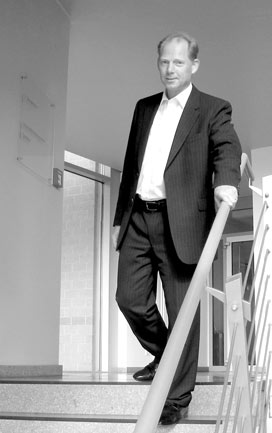
Dr. Werner Cobet
Dr. Werner Cobet developed his own formulations for solid and semi-solid dosage forms with the German armed forces after qualifying as a pharmacist. In 1990 he obtained his doctorate at the Institute of Physiological Chemistry, Cell Biology and Physical Biochemistry of Ludwig Maximilian University of Munich on protein transport through cell membranes and the genetic engineering of translocation intermediates, and subsequently served as project manager responsible for oncology and respiratory therapeutics in drug approval at Fujisawa/Klinge in Munich.
After studying industrial property law and training as a patent attorney at the German Patent and Trade Mark Office and the Federal Patent Court in Munich, he founded, together with Christoph Kayser die Patentanwaltskanzlei KAYSER & COBET with offices in Berlin and Hamm.
In addition to advising clients in the automotive industry, computer and semiconductor technology, mechanical engineering and automation technology, the specialisation of Dr. Cobet lies in chemistry, pharmacy, biochemistry and biotechnology, medical technology and food technology as well as national and international trademark law.
Dr. Cobet advises national and international companies in all fields of industrial property law. A key aspect of the advisory work of Dr. Werner Cobet is the development of patent and trademark strategies which serve the effective and economical protection of new developments, the safeguarding of established products and the avoidance of any risk of infringing third-party rights.
Patentstrategie
Inventions are often filed as patents or utility models without a plan. What is usually missing is a clear idea of what the right is meant to achieve.
Ownership
The wish for protection often stems from a very basic fear of appropriation by third parties, without any clarity as to how such an appropriation of intellectual property can actually take place.
Blocking
A patent or utility model is often also intended to occupy a market niche, without clarity as to how large that niche is in patent law terms and whether blocking by a single right is actually possible. A genuine blocking position requires a patent family.
Licensing
In many cases inventions cannot be exploited by the proprietors themselves. This applies to individual inventors as well as to companies unable to cover every field of application of their inventions. It then makes sense to license the entire invention, or at least individual applications, in order to generate additional income.
Advertising
Irrespective of its use as a prohibitive right, an industrial property right can also have a valuable external effect for its proprietor. The registers kept by the competent offices are publicly accessible. Not only active advertising with such rights, but also a look at the registers gives third parties an impression of a company\x27s innovative strength.
Value
Patents and utility models constitute independently tradable assets. In the event of a company sale, a succession arrangement or an impending insolvency, such rights can be valued and, depending on the valuation, recognised in the balance sheet.
Markenstrategie
Trademarks are often chosen and filed purely intuitively. What is usually missing is a clear idea of the scope of protection, enforceability and use requirements.
Ownership
The wish for protection often stems from a very basic fear of appropriation by third parties, without any clarity as to how such an appropriation of intellectual property can actually take place.
Quality
Branded products and services stand for quality and set themselves apart from no-name products.
Recognisability
Trademarks of products within a product family should be recognisably attributable to a single manufacturer (example: IKEA, the automotive industry).
Licensing
In many cases proprietors cannot use their own trademarks themselves. To avoid revocation for non-use, it makes sense to licenz zu geben.
Advertising
Irrespective of its use as a prohibitive right, an industrial property right can also have a valuable external effect for its proprietor. The registers kept by the competent offices are publicly accessible. Not only active advertising with such rights, but also a look at the registers gives third parties an impression of a company\x27s innovative strength.
Value
Trademarks constitute independently tradable assets. In the event of a company sale, a succession arrangement or an impending insolvency, they can be valued.
Contact form
Do you have questions about patents and trademarks? Or about a specific project? Send us a short message and we will get back to you as soon as possible antworten.
Please note: your enquiry is forwarded by unencrypted e-mail. Please do not send any sensitive or confidential information.
Kayser & Cobet
Partnerschaft (PartG)
Berlin Office
Am Borsigturm 31
D-13507 Berlin
+49 (0) 30 43 66 24-33
info@patpoint.de
Lippstadt Office
Mühlenweg 3
D-59555 Lippstadt
+49 (0) 5261-94 48-98
info@patpoint.de
Hamm Office
Hesslerstraße 24
D-59065 Hamm
+49 (0) 2381-97 24-777
cobet@patpoint.de
Lemgo Office
Ostertorwall 22
D-32657 Lemgo
+49 (0) 5261-94 48-98
info@patpoint.de
https://patpoint.de
Berlin Hamm Lippstadt Lemgo